


Nov 6, 2026 – Jan 11, 2027
Gifu City Museum of History, 1st Floor, Special Exhibition Room(inside Gifu Park)
About
Ukiyoe Immersive Art Exhibition
"Ukiyoe Immersive Art Exhibition" is based on over 300 works by world-renowned ukiyo-e artists, including Katsushika Hokusai, Utagawa Kuniyoshi, Utagawa Hiroshige, Kitagawa Utamaro, Toshusai Sharaku, and Utagawa Kunisada. Through the use of 3DCG animation and projection mapping, visitors can immerse themselves in the world of ukiyo-e and enjoy a unique digital art experience. The three-dimensional visual space depicting those Ukiyo-e loved throughout the ages, making it enjoyable for people of all ages.

Contents


Experience the powerful expression of water in the world of indigo, also known as "Japan blue"
"Indigo" is known around the world as "Japan blue" and many people are fascinated by its beauty.
The works of ukiyo-e artists such as Katsushika Hokusai and Utagawa Hiroshige, which depict the great ocean and rough waves, are dynamically fascinating. The expression of water was a lifelong theme for ukiyo-e artists. This is a unique ukiyo-e space where visitors can immerse themselves in the immersive experience of video technology and the fantastic blue space, while feeling the powerful expression of ukiyo-e that has been passed down to the present day, the ability to capture a moment in time, and the excellence of each work.
OPEN

Collaboration of great men who emit overwhelming energy and intense power
This space is a dynamic representation of ukiyo-e paintings that emit bold, delicate, and wild energy based on Samurai and Sumo, such as Utagawa Kuniyoshi's the Suikoden series. People at that time were amazed and enthusiastic about the figures that exuded intense power, with expressions so strong and compositions so powerful that it was hard to believe that they were ukiyo-e. These ukiyo-e, which condenses the dynamism, realism and energy of the physical body, breaks the common sense of ukiyo-e.
OPEN

A space where the beauties of nature vividly color the changing seasons
The space is a place where you can feel the view of nature of people who have cherished and found beauty in the changing seasons through the paintings of flowers and birds depicting nature as it is in its natural state. This is a Japanese beauty that should be conveyed and preserved in this time of serious global environmental problems. The world of flowers overwhelms you with its delicate brushwork that creates a story within the picture and beautiful color expression.
OPEN

More vibrant, more fun, and more heartfelt "Edo pop culture" revived in the modern age.
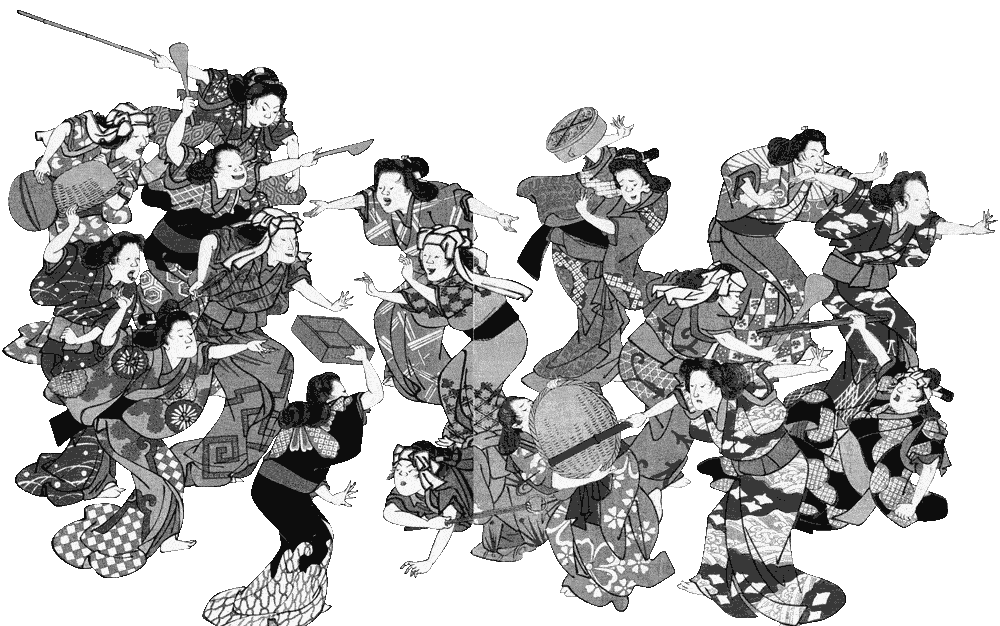
This is a space where especially vivid and pop artworks are carefully selected from the overwhelming "Edo pop culture" of ukiyo-e, which was loved by the general public in the Edo period, and are displayed in a glittering and colorful manner. The japanese people with their delicate and keen sensitivity, elegance, grace and intellectually refined emotional beauty are at the core of the flourishing ukiyo-e culture. ukiyo-e, the art form that dances in the heart of the Edo period, which was with the people of Edo, has been revived as modern pop culture and has become more enjoyable and accessible, and ukiyo-e vividly decorates the space.
OPEN

At "Ukiyoe Immersive Art Exhibition GIFU," venue-exclusive original content brings ukiyo-e depicting Nobunaga and cormorant fishing (ukai) to life.
*Further details will be announced at a later date.
Event Guide
Ukiyoe Immersive Art Exhibition GIFU
Date & Time
Friday, November 6, 2026 – Monday, January 11, 2027 (national holiday) 9:00 AM – 5:00 PM
*Last admission: 4:30 PM
*Closed: every Monday (open Mon, November 23), Tue, November 24, and Mon, December 28 – Mon, January 4
Venue
Gifu City Museum of History, 1st Floor, Special Exhibition Room
(18-1 Omiya-cho 2-chome, Gifu City, Gifu Prefecture (inside Gifu Park))
Organizing
Ukiyoe Immersive Art Exhibition GIFU Executive Committee
(Gifu City, The Gifu Shimbun, Gifu Broadcasting System, HITOHATA, TV Aichi)
Ukiyo-e Navigator
Horiguchi Masumi
Planning & Production
HITOHATA, TV Aichi
Access
Public Transportation
From JR Gifu Station or Meitetsu Gifu Station, transfer to the Gifu Bus N Line (via Nagara Bridge)
After getting off at the “Gifu Park/Gifu Castle” bus stop, it is a 3- to 5-minute walk
Car
About a 15-minute drive from JR Gifu Station / Meitetsu Gifu Station
If you are coming by car, please use the Gifu Park parking lot or a nearby parking facility.

Ticket
詳細は後日お知らせいたします。
おとな
Ticket
Early Bird Ticket
※販売終了
Adult (High school student and above)
JPY
1,500
JPY
1,300
Elementary & Junior High School Students
JPY
700
JPY
500
●Advance tickets: Tuesday, September 1, 2026, 10:00 AM – Thursday, November 5, 2026, 11:59 PM
●Same-day tickets: Friday, November 6, 2026, 0:00 AM – Monday, January 11, 2027 (national holiday), 4:30 PM
*Free admission for preschool children
*This ticket also grants admission to the 2nd Floor, Permanent Exhibition Room, Gifu City Museum of History (Permanent Exhibition).
*Groups of 20 or more qualify for a discounted (advance) rate. (Group discount tickets can only be purchased at the venue.)
*Admission is free for the following visitors; please present proof of eligibility.
・Holders of a Physical Disability Certificate, Mental Disability and Health Welfare Certificate, Rehabilitation Certificate,
a Specific Medical Expense (Designated Intractable Disease) Recipient Certificate or Registration Certificate,
or a Pediatric Chronic Specific Disease Medical Recipient Certificate or Registration Certificate
(Mirairo ID accepted)
・One caregiver accompanying the above visitor
・Junior high school students and younger visiting on Family Day (Sunday, November 15 or Sunday, December 20)
・Elementary and junior high school students (Grades 1–9 of compulsory education schools) residing in Gifu City
Buy Tickets
Early Bird Ticket / Same-Day Ticket WEB Ticket sales
*Tap the logo to go to the purchase page.
On sale: Tuesday, September 1, 10:00 AM


*If you purchased your ticket through a ticket outlet or convenience store other than Cloud Pass, please exchange it for an admission ticket with a QR code at the reception desk on the day of your visit.
*Your "Ukiyoe Immersive Art Exhibition GIFU" ticket also grants admission to the Permanent Exhibition Room, Gifu City Museum of History (Permanent Exhibition). Please note that, depending on congestion, you may need to wait before entering.
*For details on the Permanent Exhibition Room (permanent exhibits), please check the Gifu City Museum of History website.
Early Bird Ticket / Same-Day Ticket Convenience Store sales

<P Code (Ticket Pia)> 996-255
Available at the multi-copy machine located in 7-Eleven stores.

<L code> 41429
Available at "Loppi" in stores.

<L code> 41429
Available at "Loppi" in stores.

Tickets can be purchased from the multi-copy machine installed in stores.
*If you purchased your ticket through a ticket outlet or convenience store other than Cloud Pass, please exchange it for an admission ticket with a QR code at the reception desk on the day of your visit.
*Your "Ukiyoe Immersive Art Exhibition GIFU" ticket also grants admission to the Permanent Exhibition Room, Gifu City Museum of History (Permanent Exhibition). Please note that, depending on congestion, you may need to wait before entering.
*For details on the Permanent Exhibition Room (permanent exhibits), please check the Gifu City Museum of History website.
Venue Ticket sales

Venue ticket vending machine
*Tickets can be purchased at the box office on the day of the event.
*Your "Ukiyoe Immersive Art Exhibition GIFU" ticket also grants admission to the Permanent Exhibition Room, Gifu City Museum of History (Permanent Exhibition). Please note that, depending on congestion, you may need to wait before entering.
*For details on the Permanent Exhibition Room (permanent exhibits), please check the Gifu City Museum of History website.
Event
"Ukiyo-e Dyed in Japan Blue: Focusing on Hokusai, Hiroshige, and Kuniyoshi"
Speaker
Mayumi Sugawara (Professor, Osaka Metropolitan University)
Date and Time
Saturday, November 28, 2:00 PM – 3:30 PM
Capacity
170 people (first-come, first-served)
How to Apply
Apply via the museum's website application form or by phone (058-265-0010)
Application period: Tuesday, September 8, 9:00 AM – Friday, November 27, 5:00 PM
Venue
Gifu City Museum of History, 1st Floor Auditorium
Fee
Free
However, presentation of an admission ticket for this exhibition (valid for same-day entry only) is required


REVIEW
*The information has been extracted and organized from visitor reviews, including those of past venues, posted on the "Asoview!" leisure reservation site.
*Please note that the exhibition details mentioned in reviews may differ from those at this venue.
Ukiyo-e collection
The Great Wave off Kanagawa, from the series [Thirty-six Views of Mount Fuji]
Katsushika Hokusai
Fine Wind, Clear Morning, from the series [Thirty-six Views of Mount Fuji]
Katsushika Hokusai
Shower below the Summit, from the series [Thirty-six Views of Mount Fuji]
Katsushika Hokusai
Miyamoto Musashi Kill an Enormous Whale
Utagawa Kuniyoshi
"White Jumping in the Waves" Zhang Shun, from the series One of the 108 heroes of the popular water margin
Utagawa Kuniyoshi
He Looks Fierce but He's Really Great Man
Utagawa Kuniyoshi
The Ruined Palace at Soma
Utagawa Kuniyoshi
The Actor Otani Oniji Ⅲ as Edobei
Toshusai Sharaku
The Actor Icikawa Ebizo as Takemura Sadanoshin
Toshusai Sharaku
Young Woman Blowing on a “Poppin”, from the series [Ten Classes of Women’s Physiognomy]
Kitagawa Utamaro
Thoughful Love, from the series of [Anthology of Poems : The Love Section]
Kitagawa Utamaro
Sudden Shower at Ohashi and Atake, from the series [One Hundred Famous Views of Edo]
Utagawa Hiroshige
浮世絵とは
浮世絵とは、江戸時代に成立した木版画による日本の伝統的な絵画のジャンルのことである。
長く続いた戦乱の時代が幕を閉じ、徳川幕府が開かれると江戸に活気が生まれ、人々は発展や安定を感じられるようになった。戦乱の時代は「うきよ」とは辛く儚い世の中という意味であったが(憂世)、江戸の人々の心にゆとりがもたらされると町人を中心に「浮き浮き暮らそう」という明るい意味で「浮世」という言葉が広まった。明るい時代の幕開けと共に浮世絵は庶民など一般の人々に広まり、圧倒的なポップカルチャーになったのである。現在は芸術として高く評価され、非常に高価な印象を受ける浮世絵であるが、当時は現在で数百円相当の値段で安価に手に入り、浮世絵は人々の娯楽だけでなく当時の流行や人気者を描き、大衆メディアとしての役割も果たした。また、徳川幕府による参勤交代によって浮世絵は全国各地にもたらされた。浮世絵の対象は江戸の人々だけではなかったのである。
浮世絵は、美人画、役者絵、風景画、花鳥画、武者絵などの様々な題材が描かれ、浮世絵師の細部までのこだわりが感じられる色鮮やかで美しい色彩や自由度の高さが魅力である。浮世絵に使われた藍色は「ジャパン・ブルー」と呼ばれ、世界で高く評価されており、西洋画家にも影響を与えた。本展覧会では、当時の絵を再現した復刻版だけでなく、本物の浮世絵も展示している。色褪せてもなお、その鮮やかな色が目を惹く色彩の使い方に注目してみてほしい。また、独特の構図をもつ風景画や、現在のデザインにも通じるダイナミックな表現、ユニークな戯画、顔の美化表現など多岐にわたる発想と自由さも、浮世絵が時代を超えて評価される一つの要因であるといえる。
浮世絵は約260年続いた江戸時代から明治へ、絶えず進化し続けた。浮世絵は苦しい社会の中でも人々を明るく照らし、人々と共にあった日本が誇るべき文化である。文明開化後、写真技術や新聞などメディアの登場で、浮世絵は徐々に衰退したが、現在は芸術として捉えられ、浮世絵に影響を受けたアーティストも活躍している。
命を燃やし、筆を走らせ、技を極めた絵師が残した数々の浮世絵は現在も人々を感動させ続けている


